
October 05, 2026
Hot Spots vs Allergies in Dogs: How to Tell the Difference
Your dog is chewing at one spot, scratching all over, or both. Is it a hot spot? Allergies? Something else? The two are closely linked, but they look different and need different care. Here is how to tell them apart.
What is a hot spot?
A hot spot is a patch of red, moist, inflamed skin that can appear surprisingly fast, sometimes within hours. Vets often call it acute moist dermatitis. It usually starts when something makes a dog itch, the dog licks, chews or scratches one area, and the damaged skin becomes irritated and often infected. The more it hurts and itches, the more the dog worries it, and the spot can spread quickly.
Hot spots are common on the neck, cheeks, hips and near the base of the tail, and in dogs with thick coats that trap moisture.
What do allergies look like?
Allergies are one of the most common reasons dogs itch in the first place. Allergic itch is usually widespread and ongoing rather than one sudden sore. It tends to affect the paws, ears, face, belly, armpits and groin, and it may come and go with the seasons.
Side by side
| Hot spot | Allergies | |
|---|---|---|
| How it starts | Suddenly, often over hours | Gradually, over days or weeks |
| Where | One defined patch | Several areas at once |
| Look | Red, wet, oozing, matted fur, sometimes a crust | Pink skin, dryness, flaking, hair thinning |
| Feel for your dog | Often painful to touch | Itchy, less often painful |
| Pattern | A single flare | Recurring, often seasonal |
Here is the important link: allergies are one of the most common triggers for hot spots. So a dog with allergies may develop a hot spot on top of the everyday itch. Fleas, ear infections, and moisture trapped in a thick coat after swimming or bathing are other common triggers.
What to do about a hot spot
Hot spots can become infected and spread quickly, so the safest first step is to call your vet, especially if the area is larger than a coin, oozing, or your dog will not let you touch it. Vets usually clip the fur, clean the skin and may prescribe medication.
While you wait for your appointment:
- Stop the licking. A cone or recovery suit protects the area.
- Keep it dry and uncovered. Bandages trap moisture and can make hot spots worse.
- Do not use human products. Avoid tea tree oil, zinc oxide creams, hydrogen peroxide and anything with alcohol. Some are toxic if licked and others damage healing skin.
What to do about allergies
Allergies are managed rather than cured, and your vet is your best partner here. Common steps include year-round flea prevention, wiping paws after walks, washing bedding weekly, bathing with a gentle dog shampoo, and treatments your vet may recommend for flare-ups.
For everyday comfort on intact skin, a cooling, alcohol-free spray can make itchy areas feel better between vet visits. Keep your dog from licking until it dries.
Preventing the next hot spot
- Treat the underlying itch early, before your dog starts chewing one area.
- Dry thick coats thoroughly after baths and swims.
- Keep up with brushing so mats do not trap moisture.
- Check ears regularly, since ear infections often lead to hot spots on the cheeks and neck.
More on the causes of itching: Why does my dog scratch at night? and Why is my dog licking their paws?
Quick answers
Can a hot spot heal on its own?
Very small ones sometimes settle if the licking stops, but many need veterinary care. If it is growing, oozing or painful, see your vet.
Should I shave a hot spot at home?
It is best left to your vet. Clipping a painful spot can hurt your dog and irritate the skin further.
Can I use an anti-itch spray on a hot spot?
Not on raw, open or oozing skin unless your vet approves it. Soothing sprays are for intact skin that feels itchy or irritated.
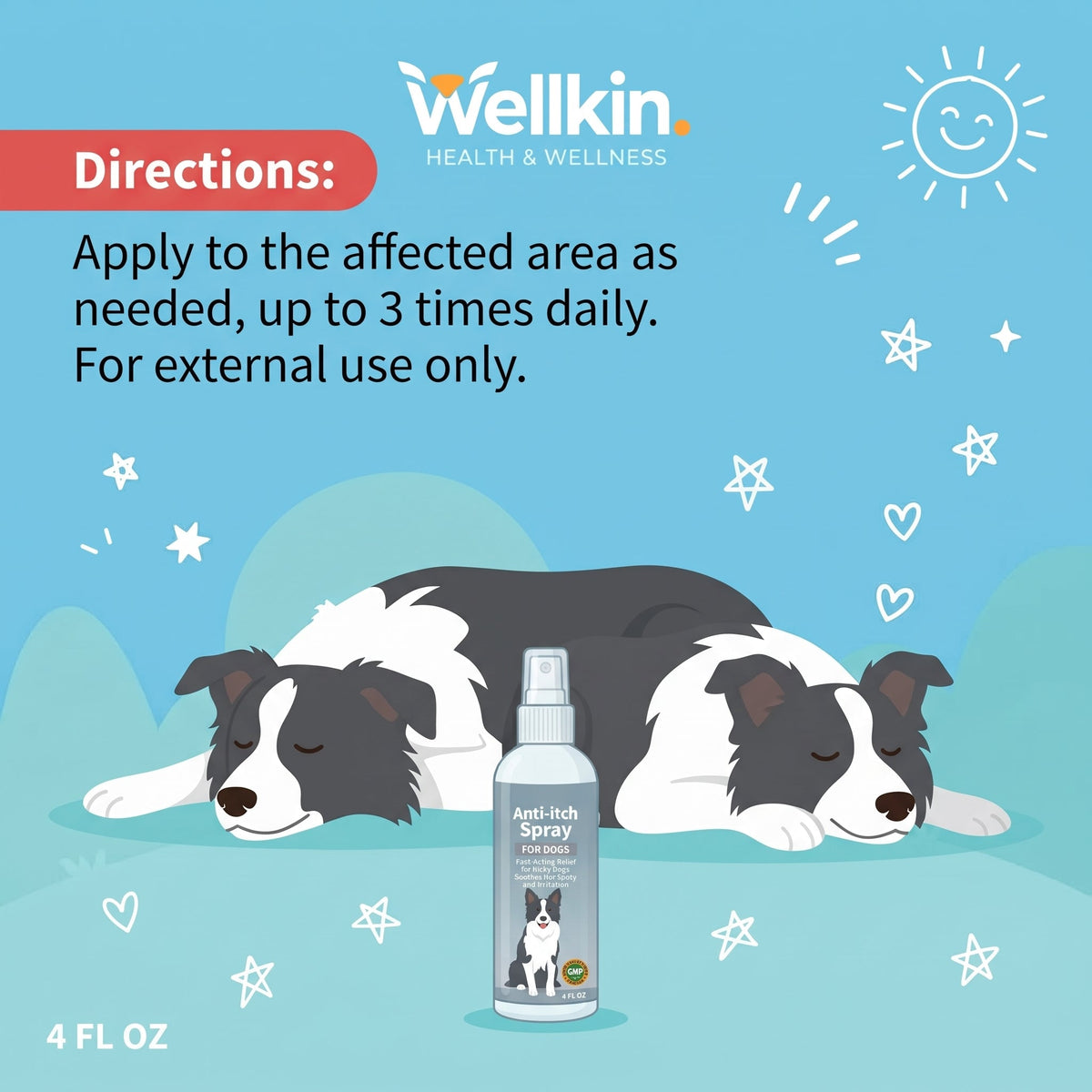
For everyday itchy spots on intact skin: Wellkin Anti-Itch Spray is a cooling, alcohol-free rose water and aloe spray. It is comfort care, not a treatment for hot spots or infections.